




July 2026 UK Energy Market Drivers

11/08/26
Market Overview
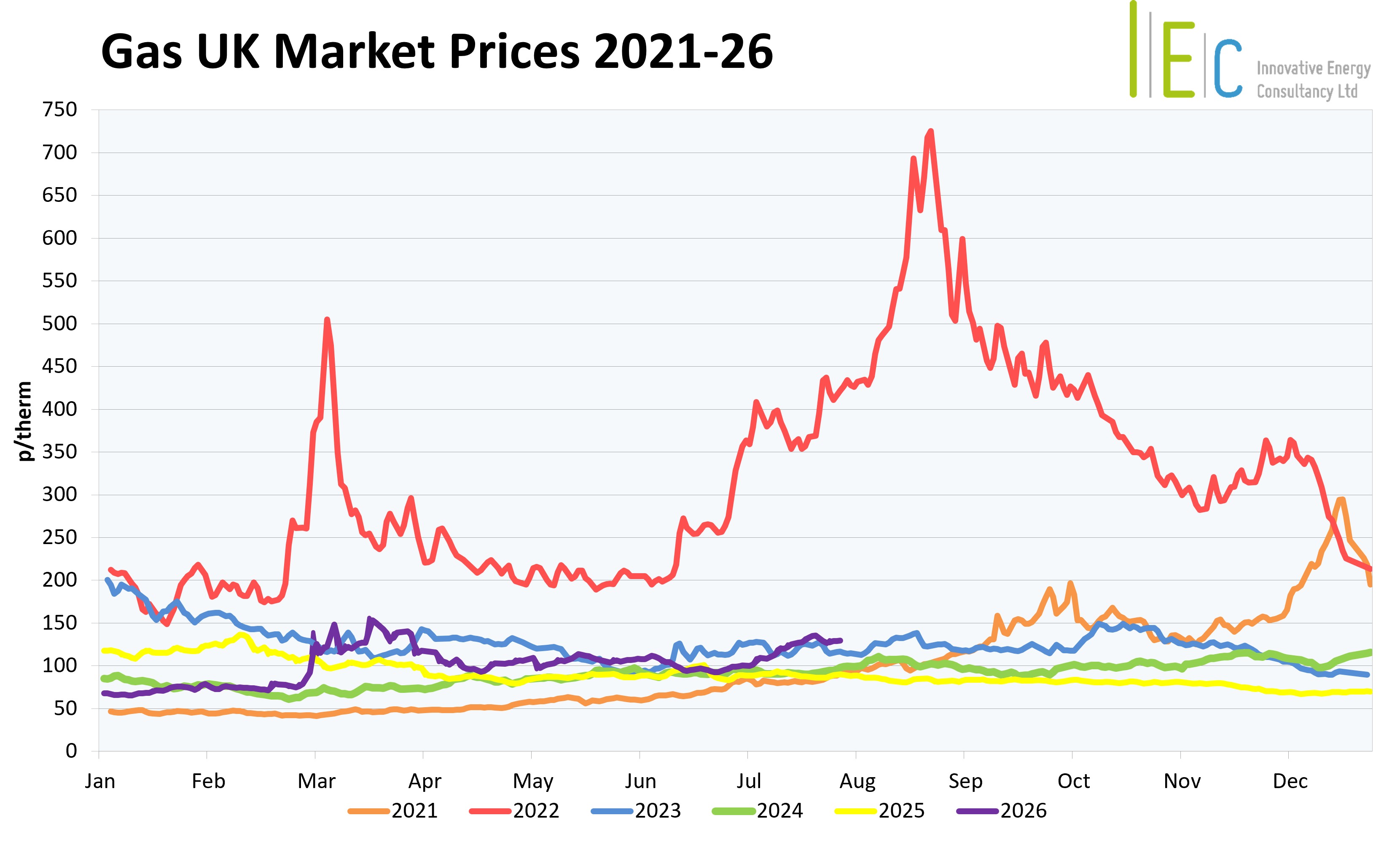
The UK energy market in July 2026 was dominated by renewed geopolitical tensions in the Middle East, which drove a sharp increase in gas prices and reinforced concerns over winter supply security.
Escalating conflict between the US and Iran disrupted LNG flows through the Strait of Hormuz, while low European storage levels and strong competition for LNG cargoes from Asia added further upward pressure. Although European storage levels increased during the month, inventories remained well below seasonal norms.
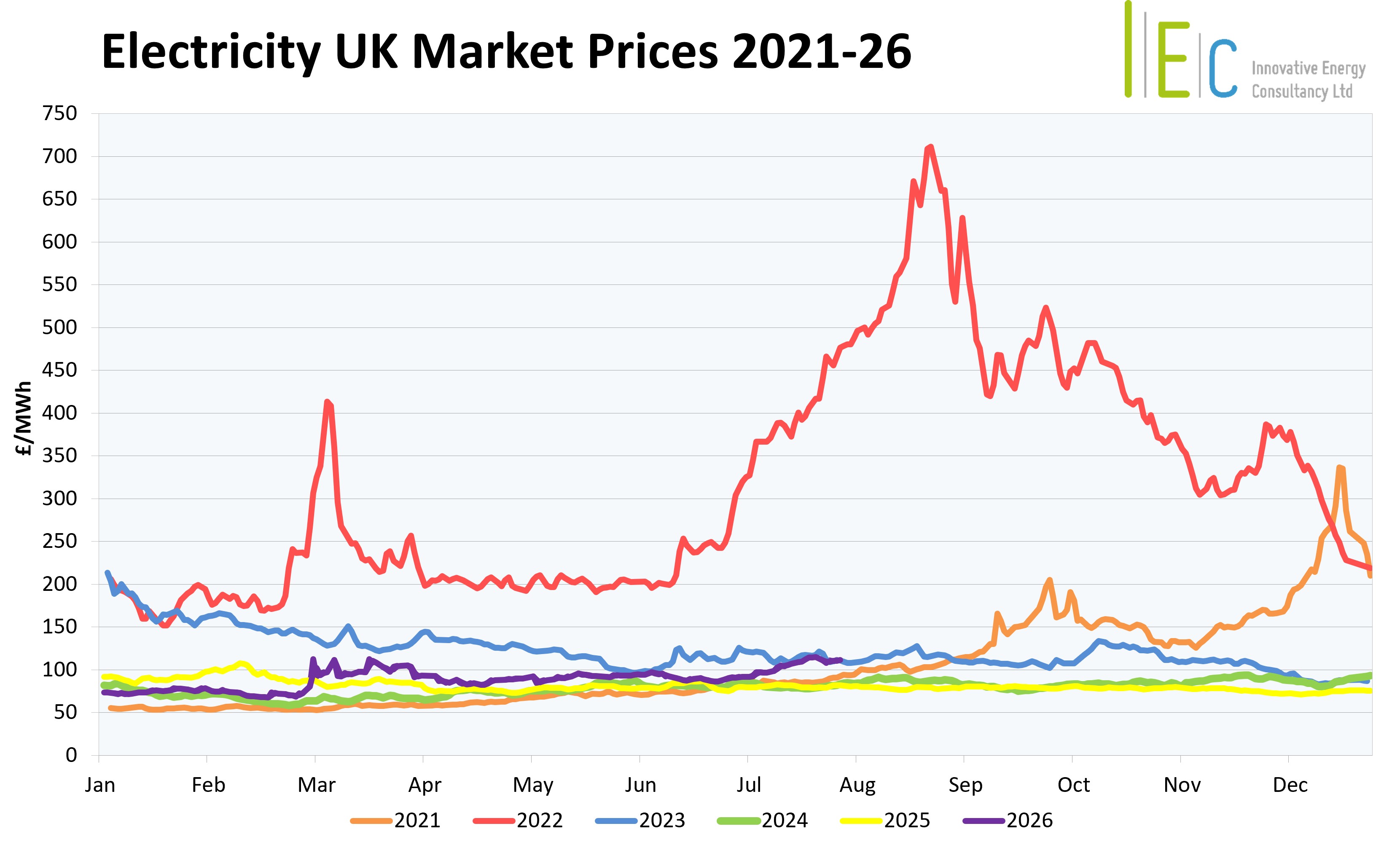
In the power market, generation was relatively balanced, with wind contributing 23% and gas 22%, while imports supplied a significant 19.5% of electricity demand. This combination left the UK power market increasingly exposed to movements in gas prices and international supply risks.
Gas Supply
Gas supply conditions tightened considerably during July as ongoing disruption to LNG exports from the Middle East increased competition for alternative supplies. European storage levels rose from 49% to 56% over the month, but remained significantly below seasonal averages, raising concerns over the adequacy of inventories ahead of winter. Several reports suggested LNG exports from Qatar remained constrained, despite improving shipping activity through the Strait of Hormuz, while attacks on vessels and renewed military action repeatedly disrupted market confidence.
The UK's gas supply mix remained robust, with domestic production and Norwegian imports accounting for 94% of supplies. LNG and EU Pipeline Imports contributed 4% and storage withdrawals 2%, limiting direct exposure to global LNG disruptions. Nevertheless, UK wholesale gas prices continued to track broader European market fundamentals and geopolitical risk.
Energy Demand
Demand conditions remained supportive throughout July. Europe continued to prioritise storage injections despite elevated prices, with inventories remaining well below historical seasonal averages. At the same time, widespread heatwaves across Europe increased cooling demand, while Asian buyers continued competing aggressively for available LNG cargoes. These factors tightened global LNG balances and supported higher gas prices throughout much of the month.
The combination of strong seasonal demand and below-average storage levels reduced market flexibility and heightened sensitivity to supply disruptions. As a result, even temporary interruptions to LNG exports or shipping routes had a disproportionate impact on market sentiment and pricing.
Geopolitical Factors
Geopolitical developments were the primary driver of market behaviour during July. Escalating tensions between the US and Iran, including airstrikes, threats against shipping, and renewed military exchanges, repeatedly increased concerns over the security of energy flows through the Strait of Hormuz. Reports of attacks on vessels in both the Persian Gulf and Red Sea added further uncertainty and contributed to a sustained risk premium in gas markets.
The market also remained focused on the pace of LNG export recovery from Qatar, with force majeure provisions continuing to affect some cargoes. Beyond the Middle East, ongoing sanctions on Russian energy exports and continued Russian attacks on Ukrainian energy infrastructure remained an important backdrop for European energy markets, reinforcing longer-term concerns around energy security and supply resilience.
Power Generation Mix
The UK generation mix was relatively diversified during July, although the system remained dependent on gas and imports to balance periods of weaker renewable output. Wind was the largest generation source at 23%, closely followed by gas at 22%. Imports accounted for a substantial 19.5% of electricity supply, while solar generation benefited from seasonal conditions and contributed 14%. Nuclear generation provided 10.5% of supply, with other technologies accounting for the remaining 11%.
While renewable generation remained an important contributor, the combined contribution from gas and imports exceeded 40% of total generation. This increased the electricity market's exposure to movements in fuel prices and external supply risks. Consequently, gas continued to play a key role in power price formation throughout the month, particularly during periods of lower wind generation. UK’s carbon price remained stable through July, ending the month at - £59 per tonne.
We meet all your
business energy needs
Find out how much money
we’ve saved for our clients,
or to arrange an informal
discussion with one of
our energy experts,
please call 01244 571830