





August 2026 UK Energy Market Report

16/09/26
UK Energy Market Overview
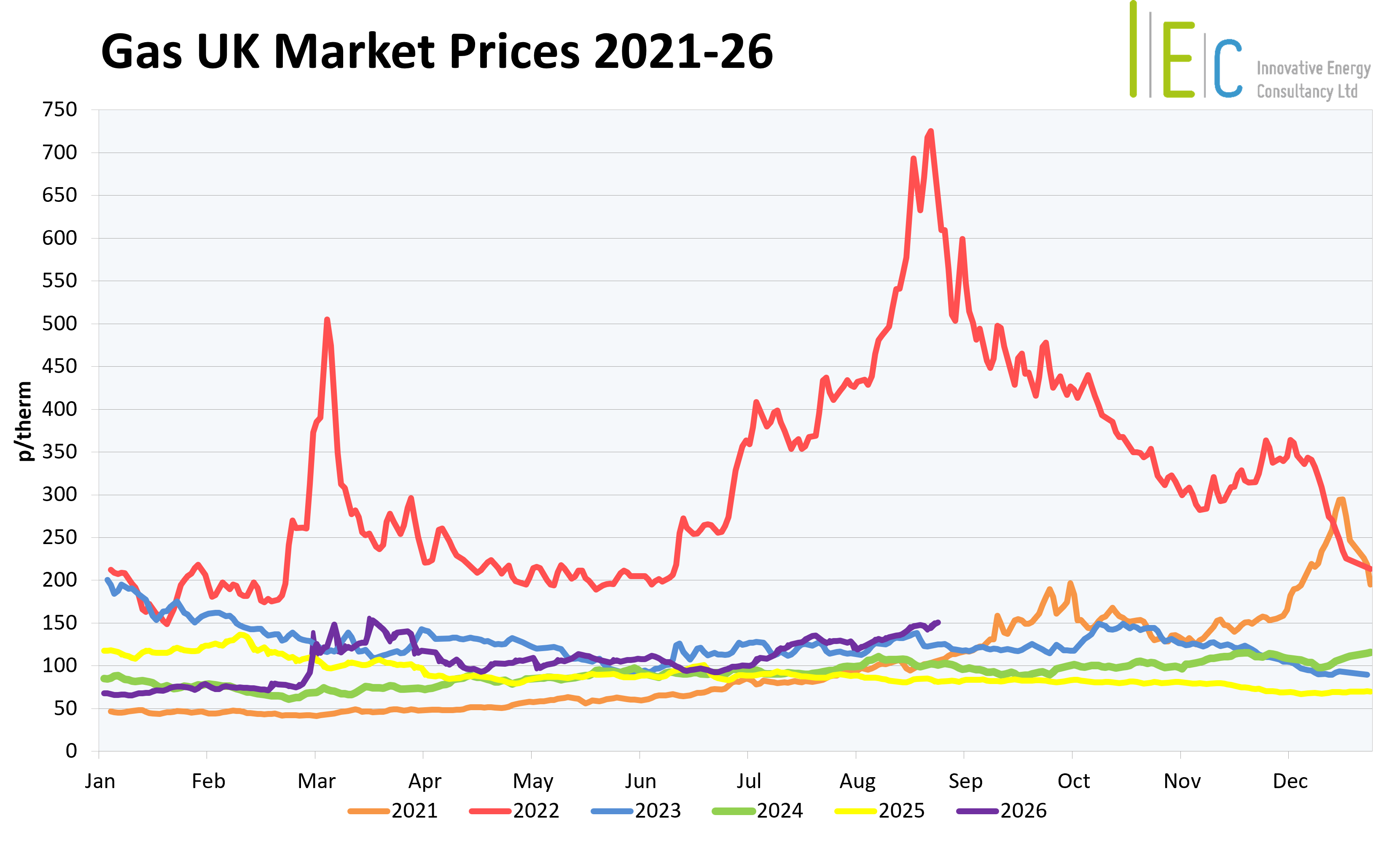
The UK energy market remained heavily influenced by global gas fundamentals during August, with concerns over winter supply security continuing to support prices. European gas markets were driven by low storage levels, ongoing disruption risks in the Middle East, and maintenance across key gas infrastructure.
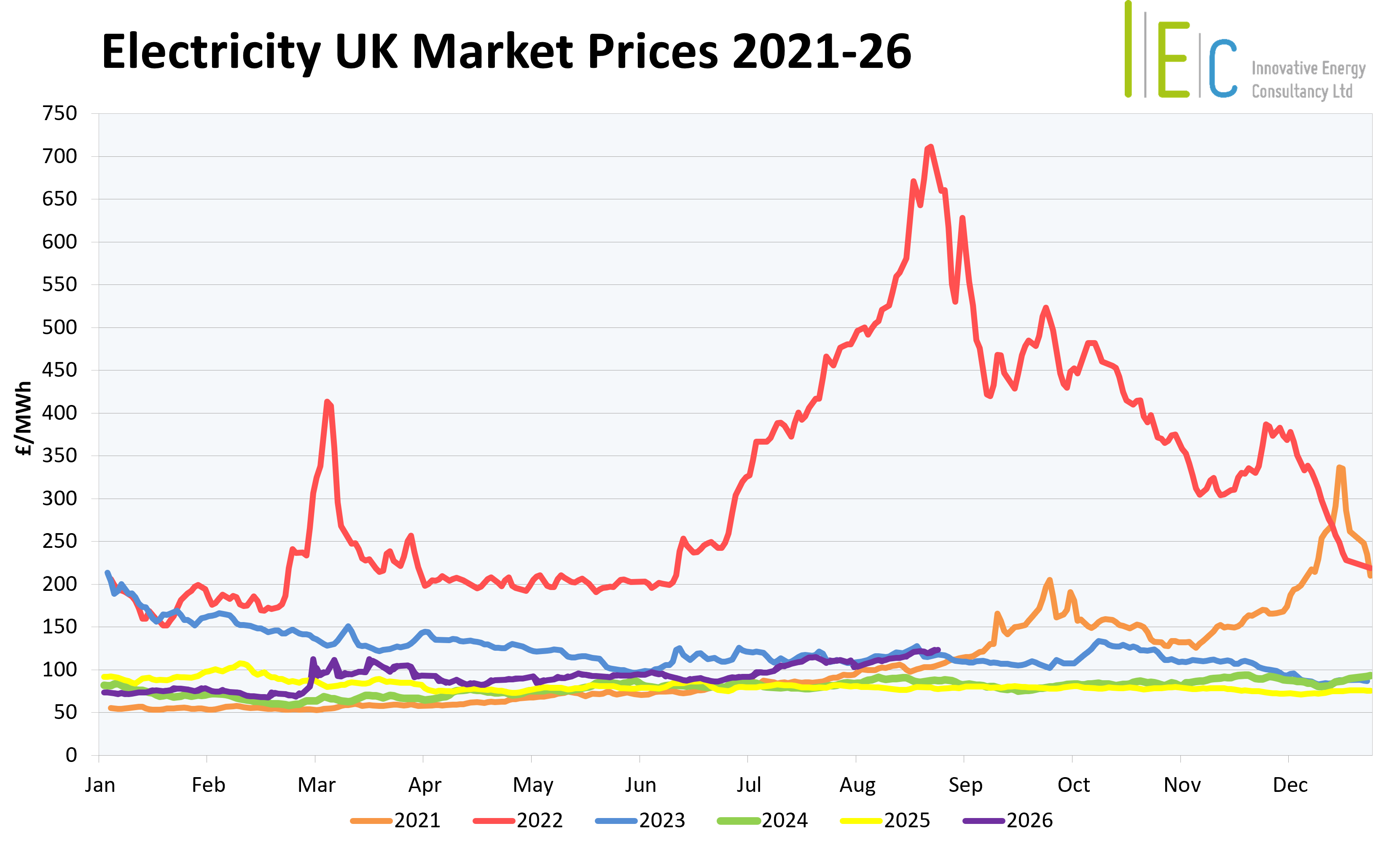
While periods of diplomatic progress involving Iran and Oman provided temporary price relief, uncertainty surrounding future shipping through the Strait of Hormuz maintained a significant geopolitical risk premium. In the power market, generation was relatively balanced, with wind contributing 23% of supply and gas 22%, while nuclear provided a strong 14% contribution. Despite this diversification, periods of weaker renewable output increased reliance on gas-fired generation, maintaining a close relationship between gas and electricity prices.
Overall, August highlighted the market's continued sensitivity to both geopolitical developments and winter supply adequacy.
Gas Supply
Gas supply conditions remained tight throughout August despite gradual improvements in European storage levels. EU inventories increased from 57% to 64% during the month, although storage remained at its lowest seasonal level since 2009, reinforcing concerns around winter readiness. Several supply-side issues supported prices, including extended maintenance at Norway's Kårstø gas processing plant and prolonged outages at the UK's Barrow North terminal.
The UK's gas supply position remained relatively robust, with domestic production and Norwegian imports accounting for 92% of supply. LNG imports and storage withdrawals each contributed 4%, limiting direct exposure to global LNG disruptions. Nevertheless, UK gas prices continued to track broader European market fundamentals.
While weaker Chinese LNG demand provided some relief, uncertainty surrounding LNG flows through the Strait of Hormuz and the need to rebuild European inventories kept supply conditions tighter than historical norms.
Energy Demand
Demand remained supportive throughout August, driven primarily by storage injection requirements and warmer-than-average weather. Several heatwaves across Western and Central Europe increased cooling demand, particularly across key markets including the UK, France and Germany. At the same time, Europe's continued efforts to replenish gas storage ahead of winter maintained strong underlying consumption despite elevated prices.
Market participants remained focused on storage adequacy heading into the winter heating season, with below-average inventories sustaining demand for LNG cargoes. Competition for available supply remained relatively strong, despite signs of weaker Chinese LNG demand. As a result, demand fundamentals prevented any significant downside in prices and continued to provide support to the wider European gas market throughout the month.
Geopolitical Factors
Geopolitical developments remained one of the most significant drivers of market sentiment during August. Markets closely monitored negotiations involving Iran, Oman and the United States regarding future shipping arrangements through the Strait of Hormuz. While signs of diplomatic progress occasionally eased prices, uncertainty surrounding implementation and continued threats to regional energy infrastructure maintained volatility.
Europe also remained focused on the security of future gas supplies following renewed Russian attacks on Ukrainian energy infrastructure, including reported strikes on gas production assets. In addition, ongoing sanctions on Russian energy exports and discussions surrounding future restrictions on Russian LNG imports reinforced long-term concerns around European energy security. Together, these factors sustained a geopolitical premium in energy markets despite some improvement in wider supply conditions.
Power Generation Mix
The UK's electricity generation mix was relatively well diversified during August. Wind was the largest generation source at 23%, closely followed by gas-fired generation at 22%. Nuclear output contributed a notable 14%, providing an important source of stable baseload generation, while solar accounted for 12% of supply during the summer period. Imports represented 16% of generation and other technologies contributed the remaining 13%.
While renewable generation remained a major component of the mix, the combined contribution from gas and imports reached 38%, maintaining exposure to movements in fuel markets and external supply conditions. Output from wind generation remained variable throughout the month, requiring gas-fired generation to play a key balancing role during lower renewable periods. As a result, gas continued to act as the marginal price setter for much of August, sustaining a strong link between gas and wholesale power prices. UK’s carbon price remained flat through the month at around £59 per tonne.
We meet all your
business energy needs
Find out how much money
we’ve saved for our clients,
or to arrange an informal
discussion with one of
our energy experts,
please call 01244 571830